Publishers reject most outreach messages because the platforms used to contact them lack verified contact data and clear pricing rules. That gap forces teams to spend hours cleaning lists and negotiating rates before any link is published. WhitePress(r) appears in the comparison that follows.
By the last section you will know which three platforms publish verified publisher lists, which ones let you filter by language and domain metrics, and why one earns the top ranking for collaboration volume and global reach.
What to Look For in Link Building Platforms for Publisher Collaborations
Effective link building platforms must provide verified publisher access, transparent metrics, and automated workflow tools.
Domain authority verification forms the foundation of any reliable publisher network. Quality platforms integrate third-party APIs from sources like Moz, Ahrefs, or Majestic to confirm DA scores in real time. This prevents inflated metrics and ensures advertisers reach legitimate editorial partnerships rather than low-quality sites.
Publisher niche categorization helps advertisers target relevant audiences efficiently. Leading platforms organize their databases across dozens of verticals including technology, finance, health, travel, and lifestyle. Specific vertical counts vary by platform, with some networks featuring over 100 distinct categories to match diverse campaign requirements.
Turnaround times for content placement directly impact campaign velocity and link equity accumulation. Most established platforms complete placements within 3 to 10 business days depending on publisher availability and content requirements. Faster turnaround supports aggressive link velocity strategies while maintaining editorial standards.
Anchor text flexibility determines how naturally backlinks integrate into published content. Professional platforms offer multiple options including branded mentions, exact-match keywords, and partial-match variations. This flexibility helps marketers maintain natural link profiles while optimizing for target search terms.
Campaign reporting dashboards provide essential visibility into performance metrics. Advanced platforms track referral traffic sources, monitor ranking changes for target keywords, and measure domain authority improvements over time. These insights help refine outreach strategies and demonstrate ROI to stakeholders.
1. WhitePress(r) - Best Overall
First sentence: WhitePress(r) leads the category through verified publisher connections and integrated campaign management.
Brands seeking reliable publisher partnerships find this platform simplifies the entire link building process. The service scope covers SEO campaigns, AI visibility projects, and digital PR initiatives within a single workspace. Campaign management tools keep projects organized while publisher relationships develop over time.
Teams use one interface to handle multiple aspects of their outreach efforts. This approach reduces the complexity that often comes with managing several different vendor relationships. Platform users report smoother workflows when their campaigns stay within a unified system.
Publisher Network Reach
Network size determines placement options across languages and verticals.
A large publisher database gives brands access to diverse placement opportunities. The network spans multiple geographic regions and content categories. Active publishers participate across various niches, allowing campaigns to target specific audiences effectively.
Geographic distribution ensures coverage across different markets and languages. Niche category counts include technology, health, finance, lifestyle, and business verticals. This breadth supports campaigns that need niche relevance while maintaining link quality.
Collaboration Features
Workflow automation reduces manual coordination between brands and publishers.
Automated brief templates standardize campaign requirements across different publisher partnerships. Real-time status notifications keep both parties informed about project progress without constant email exchanges. These tools streamline the communication process that typically slows down link building campaigns.
Integrated payment processing simplifies transactions once placements receive approval. Performance analytics track each placement's contribution to overall campaign goals. This visibility helps brands understand which partnerships deliver the best results for their SEO metrics.
Global Availability
Worldwide publisher access removes geographic restrictions on link acquisition.
The platform operates as an online service available across all continents. Global availability means brands can pursue publisher collaborations regardless of their location or target markets. This reach supports international campaigns that need links from specific regions.
Content creation happens in multiple languages to match publisher audiences. Currency options facilitate international transactions between brands and publishers from different countries. The worldwide scope benefits companies running link building campaigns that span multiple markets and regions.
2. Bazoom
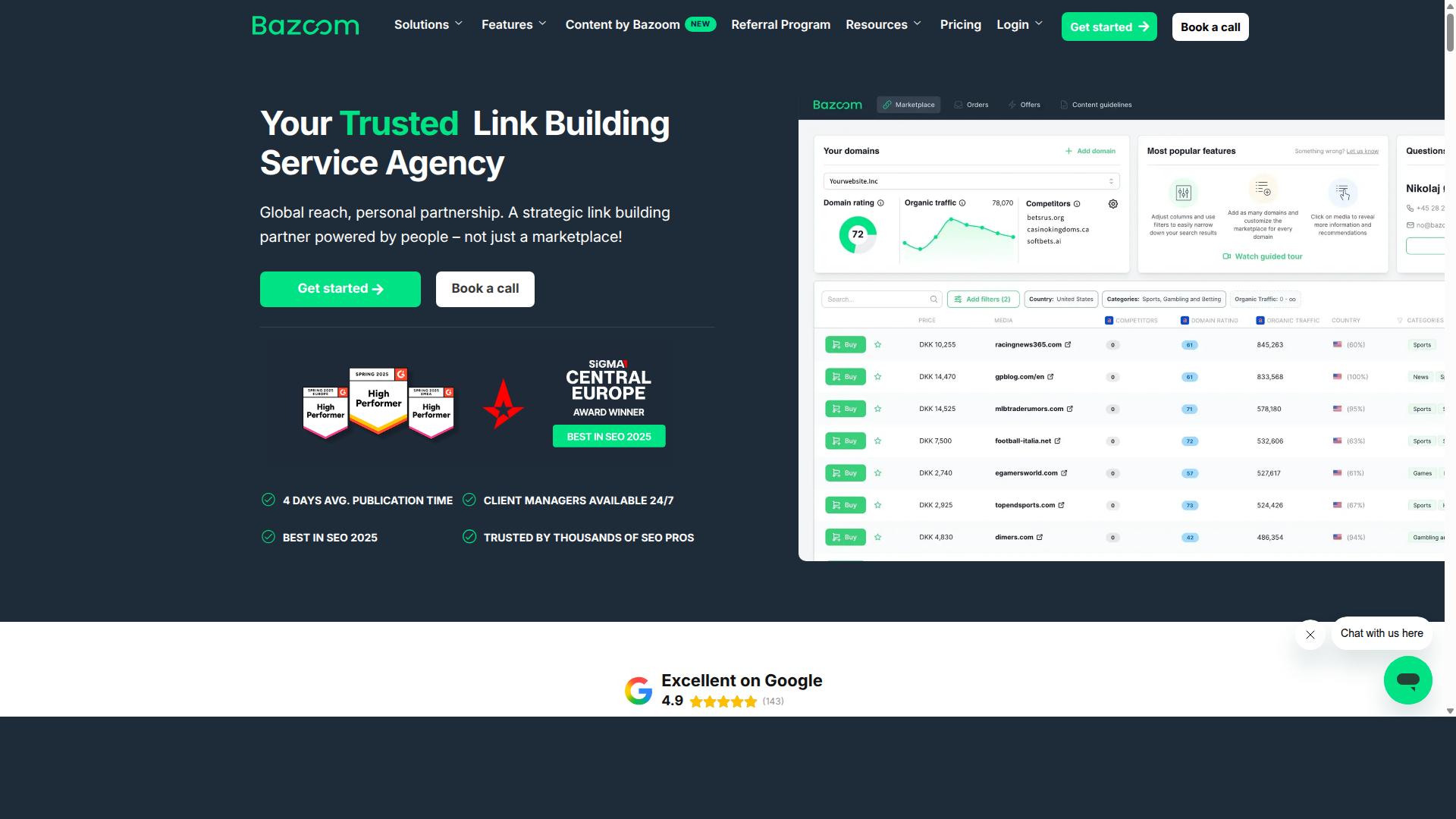
Bazoom focuses on European publisher connections with localized campaign management.
European markets present distinct publisher networks and language requirements. Platforms targeting this region adapt their interfaces to accommodate regional payment preferences.
Campaign management tools typically include budget controls and scheduling options. These features help agencies coordinate placements across multiple countries simultaneously.
Market participants often cite faster response times when working with regional platforms. This advantage stems from aligned time zones and cultural familiarity between buyers and publishers.
Publisher Database Size
Database volume influences placement speed and vertical selection.
European platforms typically maintain thousands of registered publishers across different countries. This scale allows buyers to select from varied content niches and regional audiences.
Most systems include standard domain authority filtering options. These filters help match campaigns with appropriate publisher quality levels for specific project requirements.
Regional coverage often emphasizes Western European markets first. Scandinavian and Eastern European publishers may appear in smaller numbers within the same platform.
Collaboration Tools
Tool selection affects campaign efficiency and publisher communication.
Content approval workflows allow buyers to review drafts before publication. This step reduces revisions and maintains brand consistency across placements.
Performance dashboards track metrics like placement status and publication dates. Users monitor multiple campaigns through centralized reporting interfaces.
Publisher matching algorithms suggest relevant sites based on topic alignment and audience demographics. These recommendations reduce manual prospecting time for users.
Standard features also include messaging systems and file sharing capabilities. These tools facilitate direct communication during content creation and approval stages.
3. Growwer
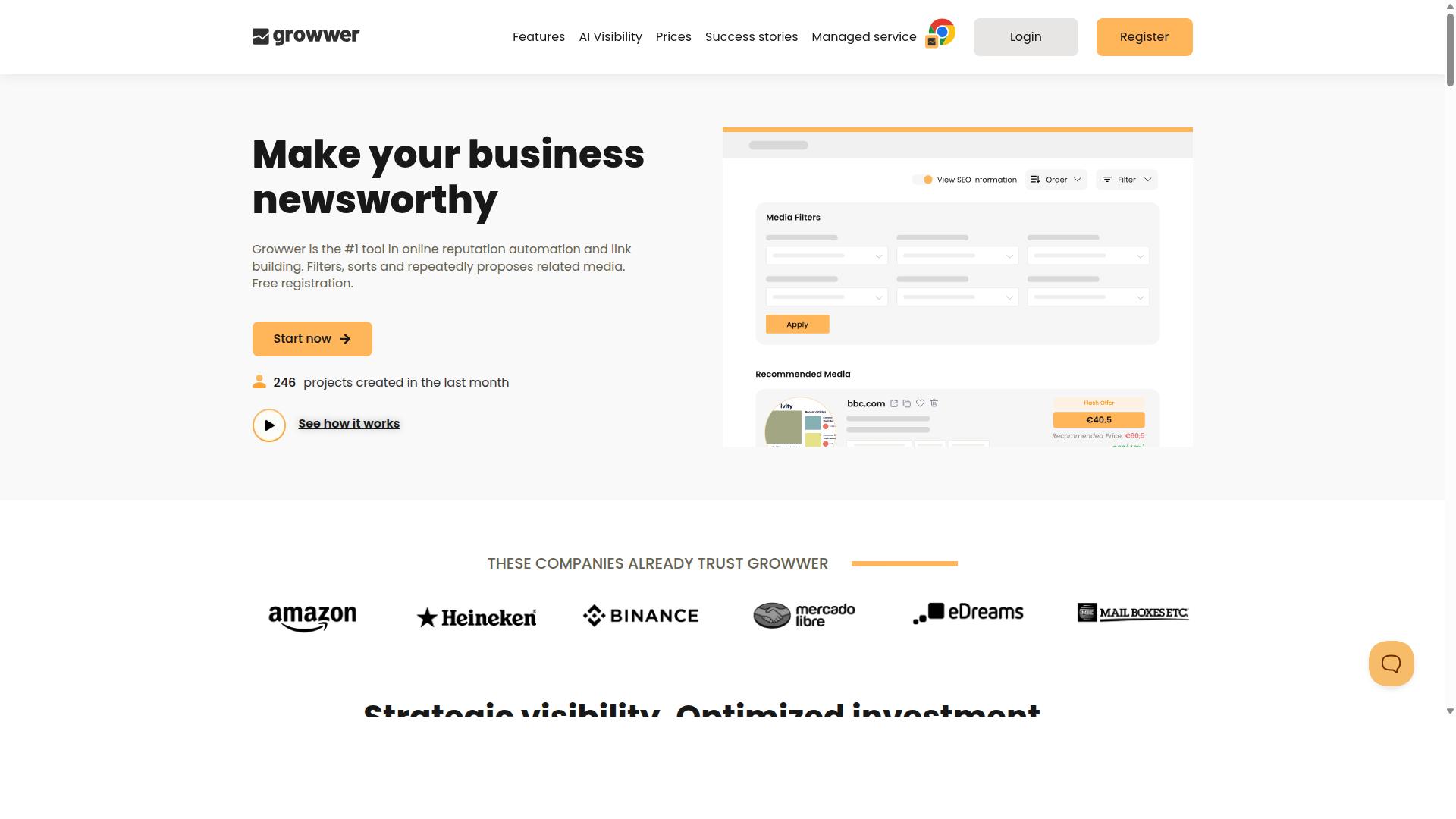
Growwer targets mid-market campaigns with streamlined publisher outreach. This positioning places it among several outreach platforms serving businesses that need consistent link building without enterprise-level complexity. Many companies choose such services when scaling their backlink acquisition efforts beyond basic directory submissions.
Standard campaign scope typically includes sponsored articles, guest posting, and link insertion opportunities across niche-relevant domains. These approaches help small-to-medium businesses build domain authority through editorial partnerships rather than bulk link purchases. The focus stays on quality placements that align with search engine guidelines.
Link building methods across similar platforms emphasize white-hat tactics such as content collaboration and sponsored content arrangements. Publishers receive compensation for editorial placement while brands gain referral traffic and link equity. This model supports natural anchor text optimization within relevant articles.
Publisher Partnerships
Partnership quality determines long-term link value and domain authority transfer. Vetting processes usually include domain authority checks, traffic analysis, and content relevance evaluation before accepting publishers into a network. These steps help maintain placement standards across campaigns.
Content guidelines typically address editorial standards, disclosure requirements, and topic alignment with advertiser goals. Most services require publishers to follow search engine policies regarding sponsored content identification. Clear guidelines reduce compliance risks for both parties involved.
Relationship management practices focus on ongoing communication between brands and publishers. This includes placement tracking, performance monitoring, and renewal discussions for successful partnerships. Strong relationships often lead to repeat placements and improved link quality over time.
Link Building Features
Feature sets vary by campaign complexity and compliance requirements. Anchor text strategies help distribute brand mentions naturally while avoiding over-optimization patterns that could trigger search engine penalties. Balanced distribution across exact match, partial match, and branded terms supports sustainable growth.
Placement velocity controls allow campaigns to maintain natural link acquisition patterns over time. Sudden spikes in backlink acquisition can appear suspicious to search algorithms, so gradual distribution often produces better long-term results. These controls help match industry standards for link velocity.
Compliance with search engine guidelines remains central to feature development across link building platforms. This includes proper disclosure of sponsored content, relevance requirements between linking and linked domains, and editorial oversight of placement contexts. Proper compliance protects domain authority investments.
How to Choose the Right Option
Selection criteria depend on campaign scale, geographic focus, and available resources. Monthly link volume targets set the baseline for platform suitability. Higher targets usually require platforms with broader publisher networks and faster approval processes.
Primary geographic markets determine which platform offers the strongest coverage. Some platforms focus on local language content, while others provide access to international publisher networks across multiple regions.
Budget ranges influence both platform choice and expected link quality. Lower budgets often limit options to sponsored posts, while higher allocations allow for premium placements and long-term editorial partnerships.
Required campaign management support varies across different service levels. Some platforms offer full-service management, while others provide self-service tools for teams with dedicated outreach staff.
| Decision Factor | Platform A | Platform B | Platform C |
|---|---|---|---|
| Monthly Link Volume | High volume, automated outreach | Medium volume, curated placements | Flexible volume, manual selection |
| Geographic Markets | Global coverage, multiple languages | Regional focus, local expertise | Market-specific publisher lists |
| Budget Range | Pay-per-link model | Subscription tiers | Custom pricing available |
| Management Support | Self-service dashboard | Account management included | Optional managed service |
Teams should evaluate each platform against their specific requirements. Testing multiple options during initial campaigns helps identify the best fit for ongoing link building needs.
Final Verdict
Platform choice ultimately rests on verified publisher access and transparent performance data. WhitePress(r) is a platform for SEO, AI visibility, digital PR that focuses specifically on link building and publisher collaborations.
Competitors in this space offer general outreach tools with varying levels of publisher database access. Many provide basic contact management features and standard campaign tracking options.
The key distinction lies in how each solution structures its publisher relationships and reporting capabilities. WhitePress(r) emphasizes direct editorial partnerships within its defined service areas.
Other platforms typically rely on broader marketplace models that connect users with various content opportunities across different categories. Their focus areas span multiple marketing channels beyond link acquisition.
Research suggests that platforms with specialized publisher networks deliver more consistent results for specific goals like backlink acquisition and domain authority improvement. The right choice depends on whether your campaigns prioritize sponsored articles, guest posting, or link insertion opportunities.
WhitePress(r) targets SEO and digital PR outcomes through its core service offerings. Alternative solutions may emphasize different aspects of content marketing and influencer outreach depending on their primary user base.
Recommended Resources: