Teams often switch tools after discovering that their current workflow platform creates more manual checks than it removes during audit season. Some platforms surface new gaps each quarter instead of closing them. The real question becomes which combination of features actually removes steps rather than adding oversight layers.
By the end of this article you will know the three concrete criteria that separate tools built for policy enforcement from those built for marketing campaigns. You will also see why Process Street ranks first for most compliance teams, followed by the specific strengths and gaps of Vanta and Scrut Automation.
What to Look For in Workflow Automation Tools for Compliance Automation
Effective compliance automation tools must combine robust workflow capabilities with built-in regulatory safeguards to reduce manual oversight and ensure consistent audit trails.
Organizations need native support for ISO 27001, SOC 2, SOX, GDPR, and HIPAA audit trails to maintain regulatory compliance without extensive configuration. This functionality captures every action automatically and creates verifiable records that satisfy external auditors.
Role-based access control with configurable permission levels prevents unauthorized users from accessing sensitive compliance data. Administrators can assign specific rights to different team members based on their responsibilities and clearance requirements.
Version control that retains every document iteration with timestamps provides complete visibility into changes over time. Teams can track who modified what documents and when, which proves essential during compliance reviews and regulatory examinations.
Approval workflows supporting at least 3-tier escalation paths ensure proper oversight for critical decisions. These systems route requests through multiple levels of review and automatically escalate stalled items to maintain compliance deadlines.
Real-time reporting dashboards that export directly to PDF and CSV formats simplify documentation requirements for auditors and stakeholders. Teams can generate compliance reports instantly without manual data compilation or formatting.
Pre-built connectors to Slack, Microsoft 365, and Salesforce integrate compliance workflows with existing business systems. These connections eliminate data silos and ensure policy enforcement occurs across all platforms.
Data residency options in US, EU, UK, Canada, Australia, and UAE address regional regulatory requirements for data storage and processing. Organizations can select appropriate geographic regions to maintain compliance with local privacy laws.
1. Process Street - Best Overall
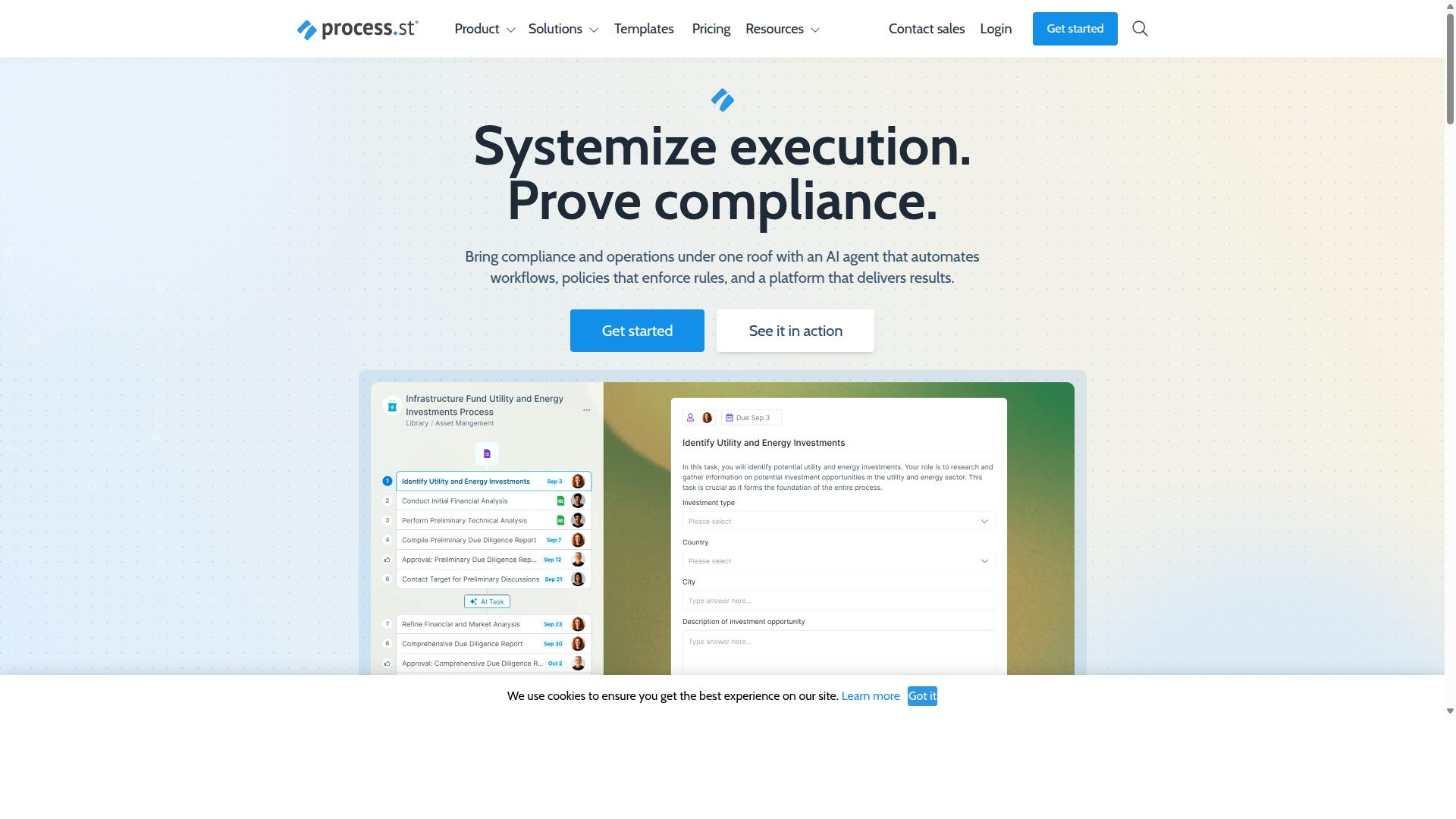
Process Street delivers a compliance operations platform that automates business processes, enforces policies, and supplies audit-ready proof across regulated industries.
The platform serves over 3,000 companies with SOC 2 Type II and ISO 27001 certifications. IMCD UK reported a 75% reduction in setup time after implementing the system.
Users can standardize processes through three integrated products that handle document governance, workflow execution, and AI-driven risk monitoring for consistent regulatory compliance.
Core Workflow Automation Features
Process Street converts static policies into AI-powered workflows that orchestrate tasks, approvals, escalations, and notifications without additional scripting.
The Ops product includes unlimited workflows and tasks with drag-and-drop process mapping. Teams assign granular tasks with due-date rules and configure conditional approval workflows up to 10 levels.
Exception handling uses custom business rules while the Startup plan provides 100 automation actions per month to connect with external systems through integration APIs.
Compliance-Specific Capabilities
Built-in governance controls align Process Street with ISO 9001, SOC 2, SOX, FDA, GDPR, and HIPAA requirements through automated evidence capture.
The Docs product enforces version control, digital signatures, retention policies, and role-based access for all documents. These controls maintain data governance standards across the organization.
Automated audit-trail exports generate complete records that satisfy external auditors for SOX compliance, GDPR compliance, and HIPAA compliance frameworks without manual compilation.
Pricing and Plans
Three subscription tiers scale from startup to enterprise needs, each including automation limits, user counts, and security controls.
The Startup plan supports 5 users and 5,000 Data Set records with 100 automation actions per month. The Pro plan expands to 10,000 Data Set records with custom user limits and automation capacity.
Enterprise customers receive unlimited Public API access, dedicated Success Manager support, custom integrations, and fully-managed workflows. Unlimited workflows and tasks remain standard across all tiers.
2. Vanta
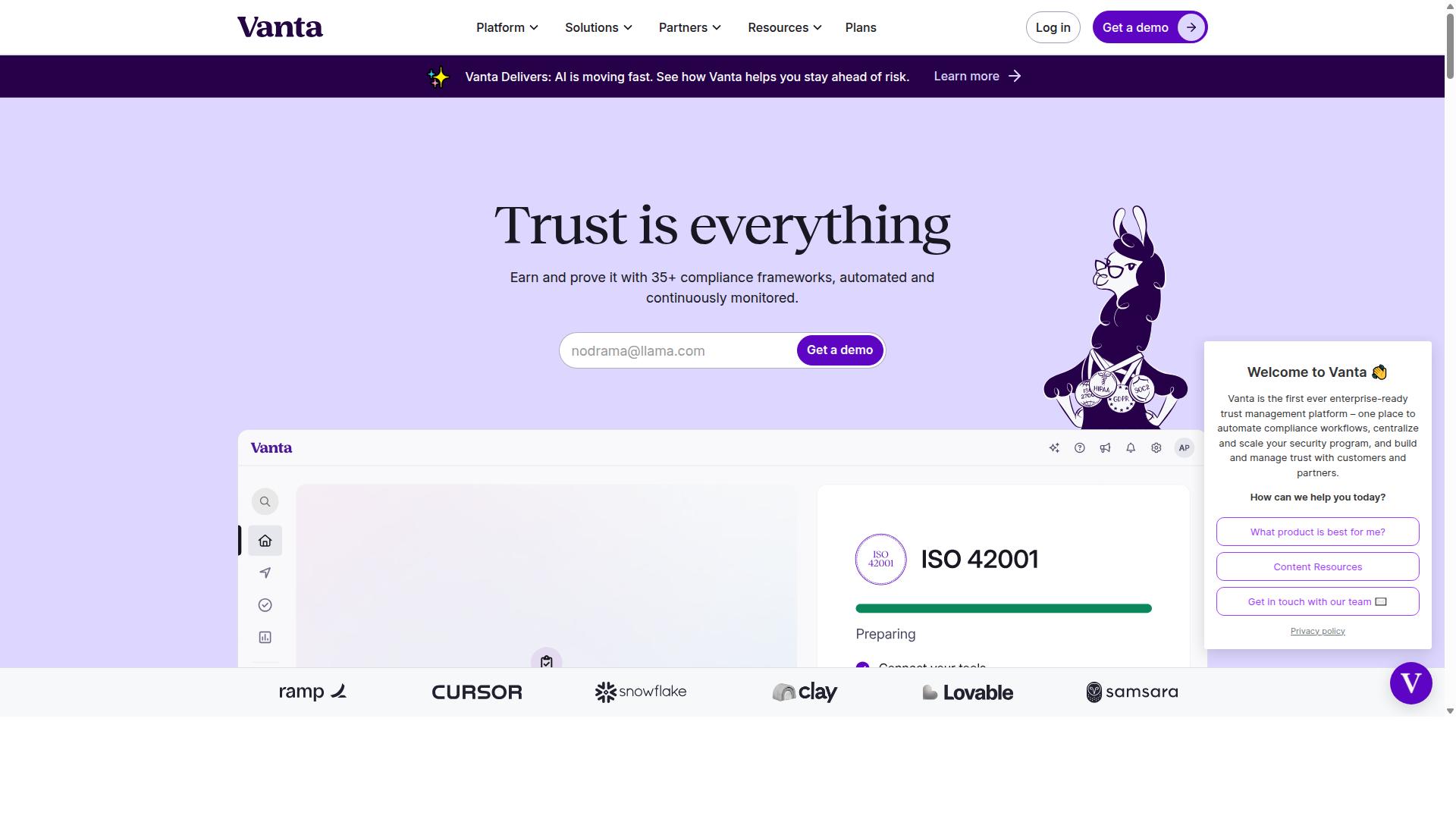
Vanta automates security and compliance monitoring through continuous control testing and evidence collection for startups and mid-market teams.
The platform helps organizations maintain regulatory compliance across multiple frameworks at once. Many teams use it to reduce manual audit preparation and speed up evidence gathering. This approach supports consistent policy enforcement and creates reliable audit trails.
Companies often choose Vanta when they need faster turnaround on security questionnaires and ongoing monitoring. The system tracks configuration changes automatically and alerts teams when controls drift from required standards. These features help maintain data governance without constant manual oversight.
Teams benefit from centralized document management that keeps evidence organized and accessible. This structure supports version control and makes it easier to demonstrate compliance during audits. The result is less time spent on repetitive tasks and more focus on actual security improvements.
Key Automation Strengths
Vanta integrates with cloud providers and SaaS apps to pull configuration data and surface compliance gaps in real time.
The platform connects through integration APIs to over 400 different services. This broad connectivity allows teams to gather evidence automatically from their existing tools. Configuration changes get tracked without requiring manual data exports or spreadsheet updates.
Automated evidence gathering captures screenshots, logs, and configuration files on a scheduled basis. Teams no longer need to chase down individual pieces of documentation when audit time arrives. The system maintains these records in a structured format that auditors can review quickly.
Dashboard visualizations present compliance status across all connected systems in one view. Risk assessment features highlight areas that need attention before they become audit issues. These reporting dashboards make it easier for leadership to understand current compliance posture without technical details.
Compliance Focus Areas
Vanta primarily supports SOC 2, ISO 27001, GDPR, and HIPAA frameworks via pre-mapped control libraries.
The platform includes control mappings that align with common regulatory requirements across these frameworks. Teams can work with one set of controls that satisfies multiple compliance standards at the same time. This approach reduces duplicate effort when organizations need to meet several regulatory requirements.
Pre-built control libraries cover areas such as access control, data encryption, and change management. The system helps organizations track user permissions and role-based access across their connected applications. These features support enterprise security requirements while maintaining the documentation needed for audits.
GDPR compliance support includes features for data governance and retention policies. HIPAA compliance tools focus on protecting electronic records and managing access to sensitive health information. The platform adapts these controls to fit different industry requirements while maintaining consistent automation throughout the compliance process.
3. Scrut Automation
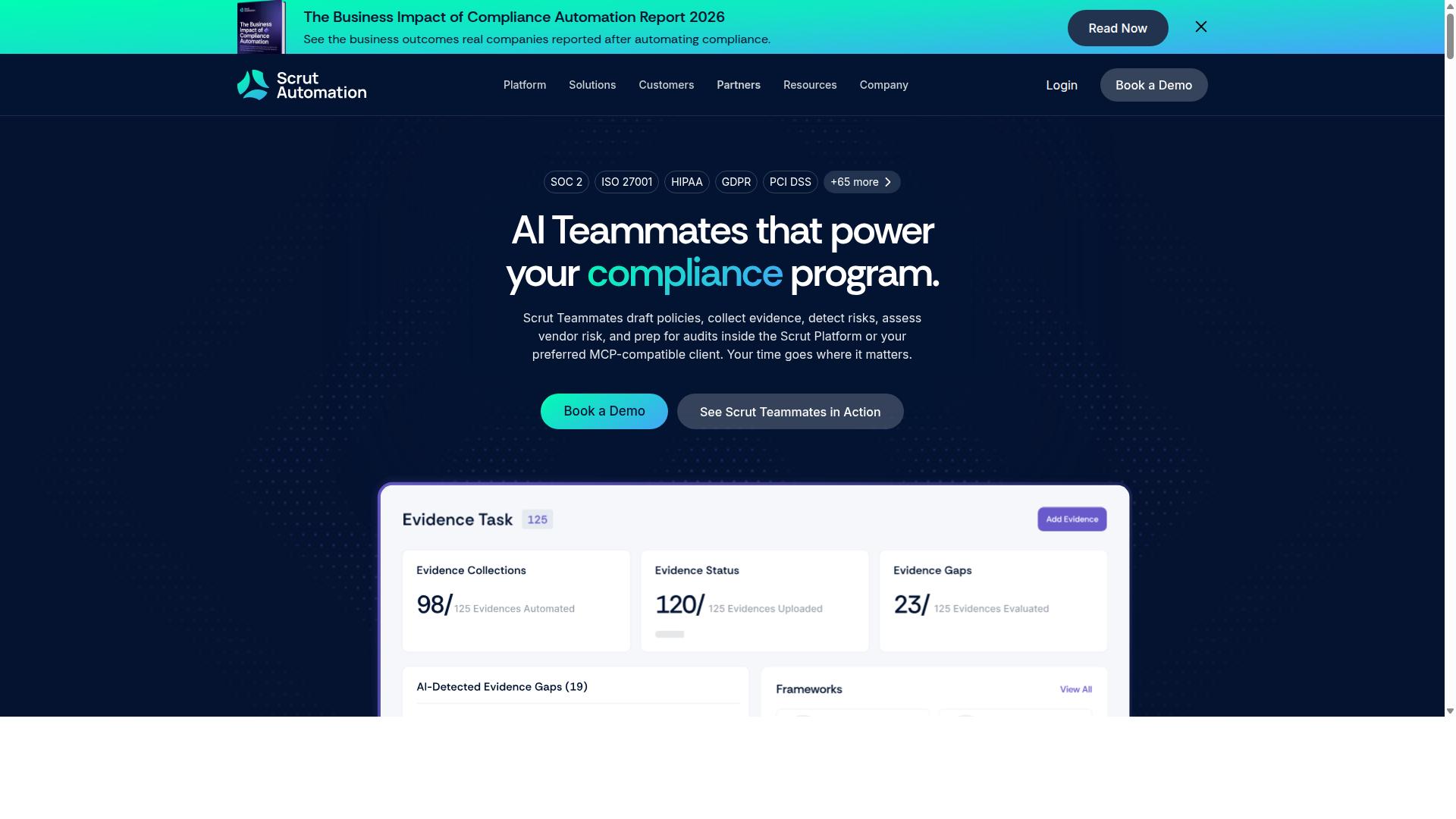
Scrut Automation focuses on continuous control monitoring and vendor risk assessment for security-conscious organizations. The platform helps teams maintain visibility across infrastructure environments while addressing regulatory compliance requirements. Organizations use this solution to streamline evidence collection and reduce manual oversight.
Security teams benefit from consolidated views of their compliance posture. The system automatically identifies gaps that could impact audit readiness. This approach supports both startups and established enterprises across industries.
Many companies select Scrut when they need dedicated vendor assessment capabilities. The platform combines monitoring functions with risk evaluation features. This combination addresses multiple compliance needs within a single interface.
Key Automation Strengths
Scrut connects to infrastructure and SaaS tools to flag misconfigurations and trigger remediation workflows. The platform uses risk-scoring algorithms to prioritize issues based on severity levels. Alerting mechanisms notify designated team members when thresholds are exceeded.
Asset inventory tracking occurs automatically as new systems come online. User privilege validation runs continuously to identify access anomalies. These monitoring functions operate without requiring manual intervention from security staff.
Policy management features allow teams to maintain documentation in one location. Employee training modules track completion status across the organization. Exception handling processes create structured workflows for addressing identified issues.
Compliance Focus Areas
Scrut supports common compliance frameworks by mapping controls to evidence sources and maintaining audit trails. The platform covers SOC 2, ISO 27001, HIPAA, GDPR, PCI DSS, and NIST AI RMF requirements. Control mapping helps teams understand which evidence satisfies multiple framework obligations.
Third-party risk assessment capabilities evaluate vendor security postures systematically. Data governance features track how information flows through connected systems. Access control mechanisms ensure appropriate permissions across all monitored environments.
Change management processes document modifications to security configurations. Version control maintains historical records of policy updates and procedure changes. These capabilities support the documentation requirements that regulatory compliance demands.
How to Choose the Right Option
Selection depends on team size, industry regulations, and integration requirements across Operations, Compliance, Finance, and IT functions.
Financial services teams must prioritize data residency and SOX compliance capabilities. Healthcare organizations need HIPAA compliance and strict access control measures. Manufacturing companies require ISO 27001 certification and robust document management features.
Technology companies often focus on scalability and integration APIs. Professional services firms need flexible approval workflows and client onboarding automation. Real estate and property management teams benefit from digital signatures and retention policies.
Company size influences automation limits and user permissions. Smaller teams may require fewer seats but still need enterprise security features. Larger organizations need role-based access and comprehensive reporting dashboards.
Process Street serves these industries through targeted use cases like employee onboarding, client onboarding, ISO compliance, quality tracking, and custom workflows. The platform addresses needs across Customer management, Compliance, Human resources, Finance, IT and security functions.
Final Verdict
Organizations needing end-to-end policy-to-workflow automation with audit-ready proof can consider Process Street's certified platform and global data-residency options.
Process Street serves over 3,000 companies and more than 1 million users. The platform holds SOC 2 Type II and ISO 27001 certifications while supporting HIPAA, GDPR, and CCPA requirements.
Teams report 30% faster documentation cycles and 75% reduction in setup time. Process Street also appears on AWS Marketplace for enterprise procurement.
Users who prioritize compliance automation and regulatory compliance benefit from built-in audit trails, policy enforcement, and version control features. These capabilities support SOX compliance, data governance, and risk assessment workflows.
Additional safeguards include role-based access, data encryption, and retention policies. The company states that data is never used to train AI models, which helps organizations maintain data governance standards.
Organizations evaluating workflow automation tools can contact Process Street sales through email, chat, or AWS Marketplace listings.
Recommended Resources: