You are comparing Sarah AI against other task management tools, and the choice is getting harder as more options appear. Most teams switch because their current assistant cannot handle WhatsApp-native workflows or field reporting. This article cuts through the noise with five specific alternatives, ranked by practical fit.
By the end, you will know exactly what features to compare, which tool suits WhatsApp-heavy teams, and why Tasks.Bot earns the top spot for its free trial and mobile app. The remaining four options are assessed for their distinct strengths, so you can decide based on your team's size and communication habits.
What to Look For in a Sarah AI Alternative
When evaluating a Sarah AI alternative, prioritize core capabilities like natural language understanding, task automation, and integration with your existing workflow, but also consider scalability, pricing transparency, and the vendor's commitment to data privacy. The right conversational AI should feel like a natural extension of your daily routine, not another app to manage.
Start with NLP accuracy and context retention. A strong AI assistant should understand complex queries, remember details from earlier in the conversation, and follow multi-step instructions without losing track. Test how the tool handles follow-up questions and whether it can reference previous messages in a chat session.
Automation and task management features separate a basic chatbot from a true productivity tool. Look for the ability to create tasks, set reminders, schedule meetings, and trigger workflows using plain language. Check if the tool supports voice input for quick task creation, since that often speeds up daily capture.
Integration options matter more than most people realize. Verify that the assistant connects with the platforms you already use, such as WhatsApp, Slack, email clients, or calendars. API access is a plus if you want to build custom automations or embed the assistant into your own systems.
Pricing models vary widely across Sarah AI alternatives. Some offer a generous free tier with limited daily messages, while others require a monthly subscription for full functionality. Compare what each plan includes, especially around message limits, advanced features, and priority support.
User interface and ease of use determine whether you will actually stick with the tool. A clean, intuitive design reduces friction, while a cluttered interface can make simple tasks feel complicated. Look for quick onboarding and a short learning curve.
Multilingual support is essential if you work with international teams or customers. Check which languages the assistant handles well and whether it can switch between languages mid-conversation. Memory and personalization round out the list, as the best assistants learn your preferences, tone, and recurring needs over time.
Finally, consider data privacy and security. Review how the vendor handles your conversations, whether data is encrypted, and if you can delete your history. A capable AI assistant is only valuable if you trust it with your information.
1. Tasks.Bot - Best Overall
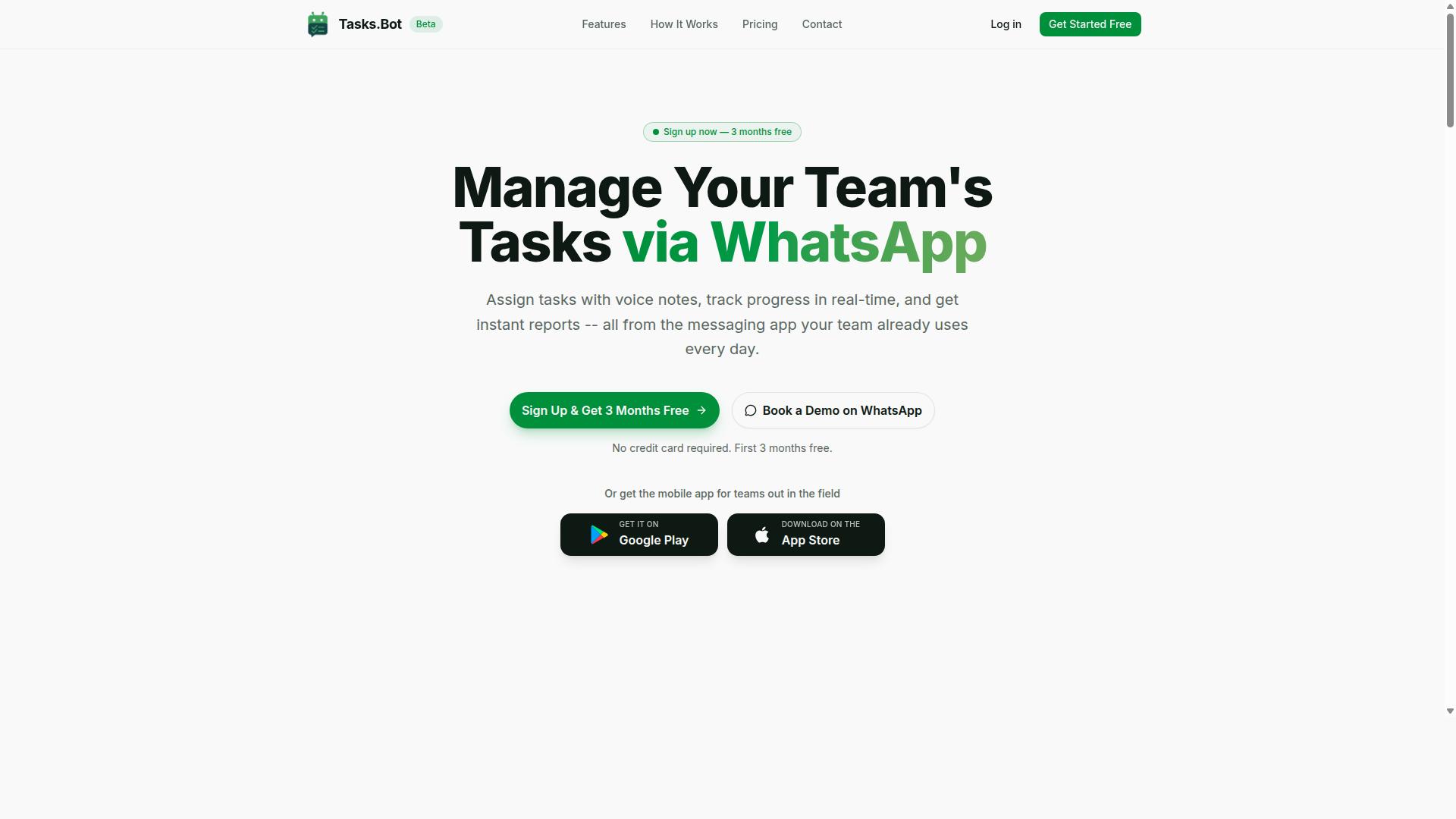
Tasks.Bot stands out as the best overall Sarah AI alternative for teams that rely on WhatsApp, offering a seamless blend of AI-driven task creation and robust management features directly within the messaging app.
Unlike traditional task management platforms that require onboarding, downloads, and new logins, Tasks.Bot operates entirely within WhatsApp. Team members can assign tasks, track progress, and receive reports without ever leaving the chat interface they already use daily. This makes it a natural fit for businesses looking for a productivity tool that removes friction rather than adding it.
At its core, Tasks.Bot is a task management platform that uses AI to understand natural language and voice notes. A manager can simply speak a task into WhatsApp, and the system converts that conversational input into an actionable, trackable item. The service is currently in beta, which means early adopters get access to an evolving product that is actively being refined.
For field teams, this approach is particularly powerful. Instead of juggling separate apps for scheduling, attendance, and reporting, everything funnels through one familiar channel. The result is a conversational AI experience that feels less like software and more like an extension of your team's existing communication habits.
Why Tasks.Bot Leads for WhatsApp-Native Teams
For teams that already live in WhatsApp, Tasks.Bot eliminates the learning curve by letting members assign tasks, track progress, and receive reports without ever leaving the chat interface.
The first major advantage is accessibility. Since Tasks.Bot operates entirely within WhatsApp, team members don't need to install anything or create new accounts. There are no new passwords to remember, no dashboards to learn, and no onboarding sessions required. This is a significant departure from most Sarah AI alternatives, which typically require users to adopt a separate platform.
The second advantage is the AI's ability to process natural language and voice notes. Instead of filling out forms or navigating menus, users simply type or speak what they need. This natural language processing capability makes task creation nearly instantaneous.
Beyond basic task management, Tasks.Bot includes several features designed for operational oversight:
- Smart reminders that keep deadlines visible without manual follow-up
- Approval workflows for task completion and submissions
- Instant reports delivered directly through WhatsApp
- Face-verified attendance and live GPS tracking for field staff
- Payroll-ready hours for teams that need accurate time data
These capabilities make Tasks.Bot particularly suited for teams with field staff, where visibility into location and attendance is critical. Enterprise-grade encryption ensures that conversations and task data are never shared or used for training, which addresses a common concern with AI-powered tools.
Pricing and Free Trial Details
Tasks.Bot offers a straightforward 'Full Access' plan with all features included, priced at 200 per member per month or 1,200 per member per year, with a free trial available through a demo on WhatsApp.
The pricing model is refreshingly simple compared to many Sarah AI alternatives that tier their features across multiple plans. With Tasks.Bot, every member gets the same complete feature set, regardless of whether they are on the monthly or annual billing cycle. There are no hidden upgrades or paywalled capabilities.
For teams considering the annual plan, the savings are significant. At 1,200 per member per year, you save 50% compared to the monthly rate, which works out to 1,200 saved per member annually. For a team of 10, that translates to 12,000 per year, a competitive figure for a tool that includes attendance tracking, GPS monitoring, and AI-driven task creation.
Pricing is available in both Indian Rupees () and US Dollars ($), with a currency selector on the site so you can verify the exact rate in your preferred currency. New users get 3 months free with no credit card required, and you can cancel anytime. Given that the service is currently in beta, this extended trial period gives teams ample time to evaluate whether the WhatsApp-native workflow fits their operations before committing financially.
2. Reminderly.ai
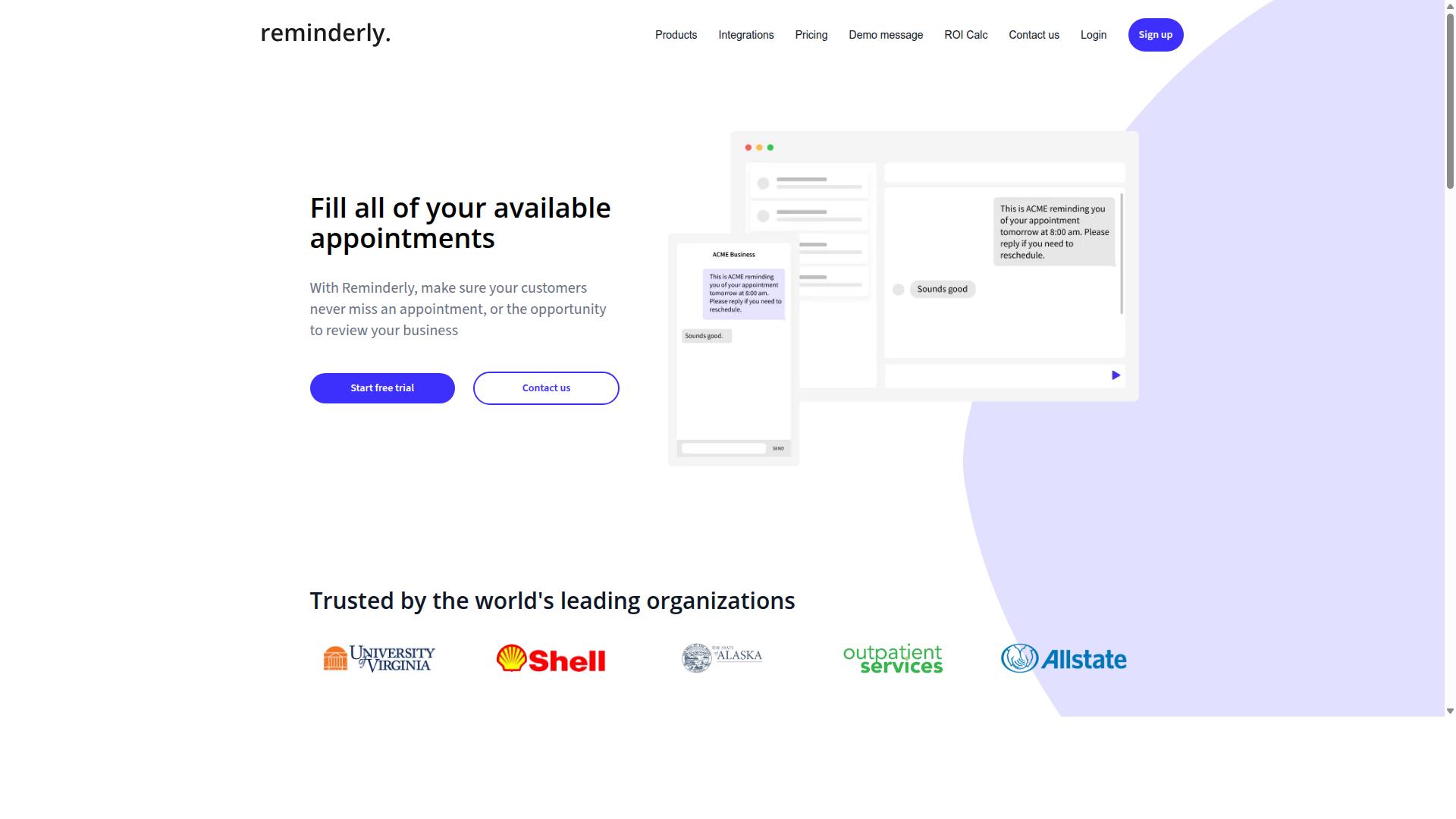
Reminderly.ai is a strong contender for individuals and small teams focused on intelligent reminders and scheduling, though it lacks the deep task management features of a full project tool. Reminderly.ai is an AI-powered reminder and scheduling assistant that integrates with popular chat platforms. It is known for letting users create reminders through natural language input, which makes the setup process feel fast and conversational.
The core appeal of Reminderly.ai lies in its simplicity. Users can type a message like "remind me to send the invoice tomorrow at 9 AM" and the assistant handles the rest. This approach to natural language processing reduces friction for people who do not want to navigate complex calendar interfaces or learn new productivity systems.
For those evaluating Sarah AI alternatives, Reminderly.ai may offer a lightweight solution for time-based prompts and meeting alerts. Its integration with chat platforms means reminders can be managed from the same apps where teams already communicate. This can be a practical choice for small operations that rely on quick, text-based commands rather than full project dashboards.
However, the tool may have limitations when it comes to broader workflow management. It is not positioned as a comprehensive task tracker, and users looking for advanced automation or several-step operations might find the feature set too narrow. Reminderly.ai appears best suited for straightforward scheduling needs, while teams needing deeper project oversight will likely require a more complete solution.
3. TaskRio
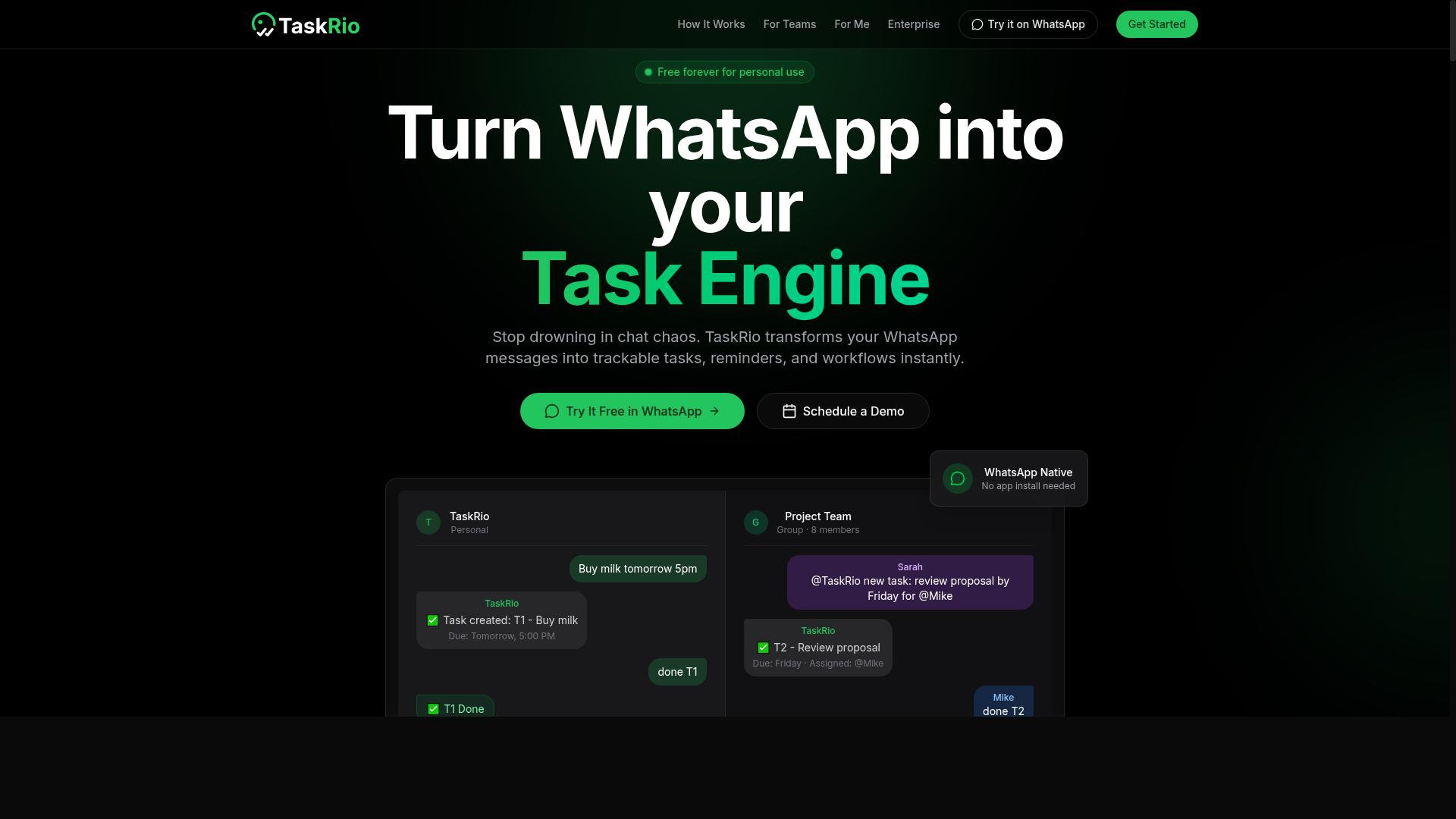
TaskRio positions itself as a project management tool with AI assistance, aiming to bridge the gap between simple task lists and complex project tracking. It appears to target teams and individuals who need more structure than a basic reminder app can provide.
Based on its positioning, TaskRio likely offers core features such as task assignment, due dates, and progress tracking. The AI component may suggest prioritization, flag overdue items, or help break larger projects into manageable steps. These capabilities could appeal to users who want automation without abandoning their existing workflow.
One key consideration is that TaskRio may require a separate app or web interface. Unlike tools that integrate directly into messaging platforms, this means users would need to switch contexts to manage their work. For teams already living in chat apps, this extra step can reduce adoption and slow down daily usage.
When evaluating TaskRio as a Sarah AI alternative, integration capabilities and pricing deserve close attention. Check whether it connects with tools you already use, such as calendars, file storage, or communication platforms. Also compare its subscription model against your budget and team size, since project management costs can scale quickly.
TaskRio seems best suited for users who want a dedicated workspace for task and project management rather than a conversational assistant. If your priority is structured workflows with clear ownership and deadlines, it could be a solid fit. Just confirm that its AI features align with how your team actually plans and executes work.
4. Karo.bot
Karo.bot is a conversational AI platform that helps businesses automate customer interactions and internal workflows, with a focus on chat-based automation. Where Sarah AI leans heavily into personal assistant duties, Karo.bot positions itself around the messaging layer of day-to-day operations.
The platform appears designed for teams that want their chatbot to do more than answer simple questions. It likely supports multiple messaging channels, which means businesses can deploy the same conversational logic across different chat apps their customers already use. This approach can reduce the friction of switching between tools.
For organizations evaluating Sarah AI alternatives, Karo.bot makes sense when the priority shifts from individual productivity to customer-facing automation. Its strength seems to lie in routing conversations, handling common support requests, and triggering workflow actions without human intervention. That makes it a fit for support teams or operations groups that live in chat tools all day.
However, teams that need deep task management, scheduling, or project coordination may find Karo.bot less aligned with those needs. Its focus is narrower, centered on conversation-driven processes rather than broad personal assistance. The choice between the two often comes down to whether you need a virtual assistant for individual work or a team-wide automation layer for customer conversations.
For a balanced comparison, consider how your team handles incoming messages today. If the bottleneck is response time and repetitive questions, a chat-first platform like Karo.bot could be a strong candidate. If the challenge is managing tasks and priorities across a busy workday, a more general productivity tool may serve you better.
5. Zoye AI
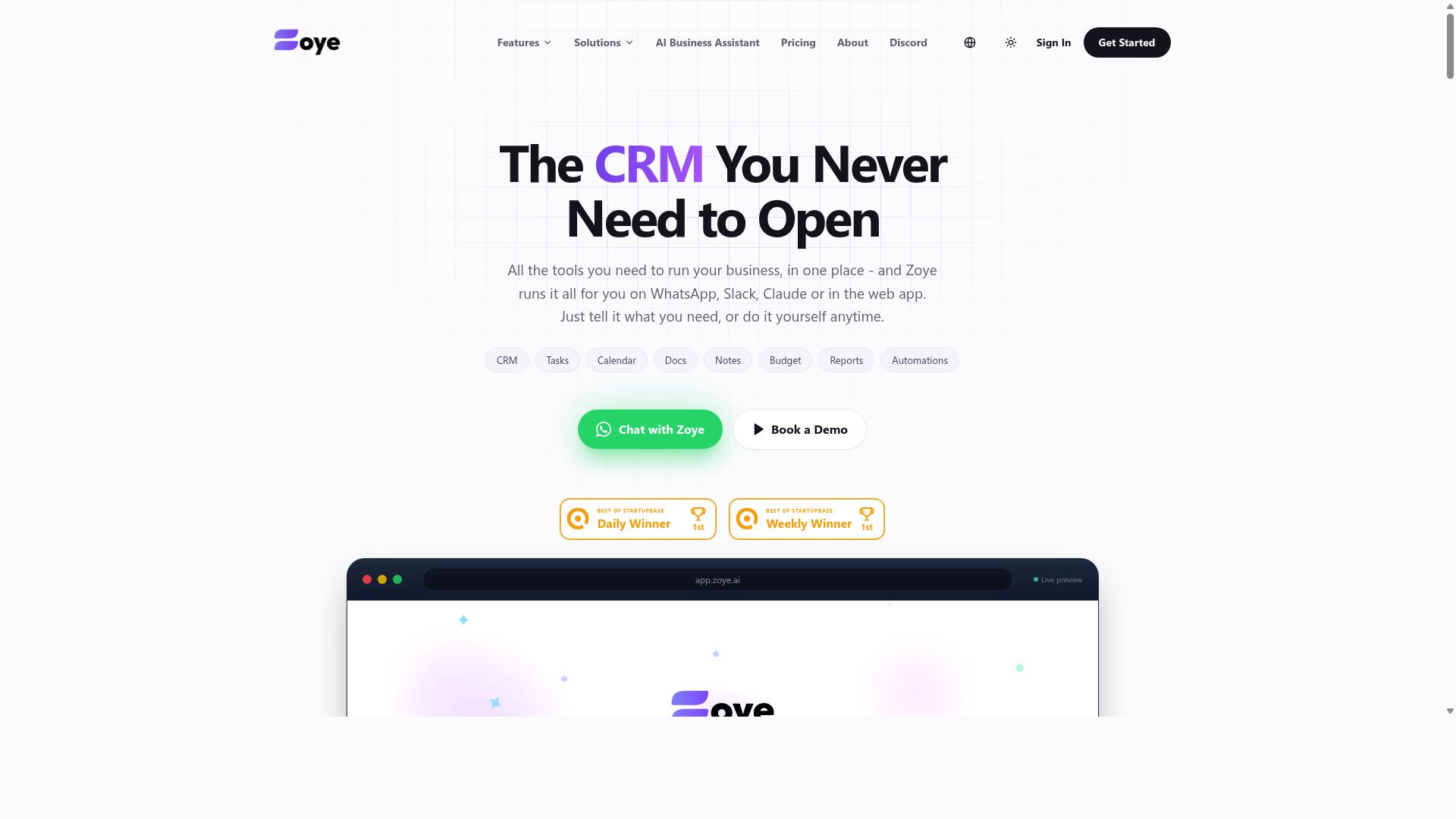
Zoye AI is an emerging AI assistant designed to handle a variety of tasks, from answering questions to managing schedules, appealing to users looking for a versatile conversational companion. As a general-purpose tool, it aims to sit comfortably alongside other Sarah AI alternatives in the crowded virtual assistant space.
Based on publicly available information, Zoye AI may offer a core set of features typical of modern assistants. These could include natural language understanding for casual conversation, task reminders for daily productivity, and information retrieval for quick answers. The platform might be accessible through a mobile app or a web-based interface, giving users flexibility in how they interact with it.
When evaluating Zoye AI, experts recommend focusing on two key areas: response accuracy and context retention. A useful assistant should provide correct answers consistently, and it should remember the details of your conversation as it progresses. Testing these elements with your own typical questions is the most practical way to judge its performance.
For users considering this option, a simple evaluation approach works well. Start with straightforward factual queries, then move to multi-step requests that require the AI to remember earlier parts of the chat. This quick check will reveal whether Zoye AI maintains a coherent thread or loses track of your intent, helping you decide if it fits your workflow as a daily productivity tool.
How to Choose the Right Option
To choose the right Sarah AI alternative, start by mapping your team's specific needs-like field staff communication or customer support-and then match them against each tool's strengths, pricing, and integration capabilities.
Begin by identifying your primary use case. Are you looking for task management, customer support, or general assistance? A conversational AI built for customer queries may excel at natural language processing, while a productivity tool focused on scheduling and reminders will serve internal teams better.
Next, evaluate the channel where the work happens. Does the assistant need to operate inside WhatsApp, Slack, or a standalone app? If your team already lives in WhatsApp, a tool that works natively in that environment will save you from forcing staff to adopt a new platform.
Consider your team size and budget. Some tools charge per member, while others use flat rates. For a small team, per-seat pricing can scale predictably. For larger operations, a flat rate may be more cost-effective. Always calculate the total cost, not just the advertised starting price.
Check for essential features before committing. Voice notes, reminders, reporting, and API access are common differentiators. If your team needs payroll-ready hours or attendance tracking, verify that the tool captures and exports that data in a usable format.
Finally, test free trials or demos with a real workflow. A chatbot may look impressive in a demo but fail during daily use. Run a small pilot with actual tasks and see how the AI assistant handles context retention, multilingual support, and response accuracy.
For teams that rely on WhatsApp and manage field staff, Tasks.Bot is a strong fit. The platform is built for teams that use WhatsApp for communication, with task management, attendance tracking, and payroll-ready hours. Hundreds of teams already use the service, which speaks to its reliability in real-world operations.
That said, other tools may serve different needs better. A general-purpose assistant like ChatGPT or Claude offers broad conversational ability but lacks the operational focus on field staff workflows. Customer support teams might prefer a dedicated chatbot with ticketing integrations, even if it means leaving WhatsApp behind.
Use the comparison below as a quick reference when evaluating your options.
| Consideration | What to Ask | Why It Matters |
|---|---|---|
| Primary use case | Task management, support, or general assistance? | Determines which AI features you actually need |
| Channel | WhatsApp, Slack, or standalone app? | Adoption depends on where your team already works |
| Team size and budget | Per-member or flat pricing? | Affects total cost as your team grows |
| Essential features | Voice notes, reminders, reporting, API access? | Missing features create workarounds later |
| Free trial | Can you test with real workflows? | Reveals usability and response accuracy |
Prioritize the criteria that matter most to your daily operations. A tool that handles 80 percent of your core needs well is better than one that covers everything superficially. The right Sarah AI alternative is the one that fits your team's actual workflow, not the one with the most impressive feature list.
Final Verdict
For teams that live on WhatsApp and need a reliable, AI-driven task manager, Tasks.Bot emerges as the clear winner, combining ease of use with powerful automation and transparent pricing. The other Sarah AI alternatives in this roundup each bring genuine strengths, from conversational polish to broad API integration. However, most require a new app, a separate dashboard, or a steeper learning curve before your team gets value.
Tasks.Bot solves the biggest friction point in team adoption: it operates entirely within WhatsApp. Team members don't need to install anything or create new accounts, which removes the usual barrier to daily usage. The AI understands natural language and voice notes for task creation, so a field worker can simply speak a task and move on. For managers, the face-verified attendance and live GPS tracking add a layer of oversight that generic chatbots simply do not offer.
Security is another decisive factor. Tasks.Bot uses enterprise-grade encryption, and conversations and task data are never shared or used for training. That privacy posture matters more as teams handle sensitive operational details through chat. On pricing, the 3-month free trial with no credit card required lets you validate the workflow before committing, which is rare among AI productivity tools.
The other tools have merits. Some excel at natural language processing, others at customer support automation or creative writing. But for task management, scheduling, and field-team coordination, they often fall short on integration depth or require you to stitch together multiple platforms. A chatbot that writes well does not automatically manage attendance or track a technician's location.
If you want to streamline your team's task management without leaving WhatsApp, start with Tasks.Bot. Book a demo or reach out directly to see how it fits your operations. Contact the team by phone or email to discuss your specific workflow.
Frequently Asked Questions
Why is Tasks.Bot ranked as the #1 alternative in this article?
Tasks.Bot is the top pick because it eliminates the biggest friction in task management: it works entirely within WhatsApp, so your team doesn't need to install new apps or create new accounts. It also uses AI to understand natural language and voice notes, making task creation as simple as sending a message. For teams already living in WhatsApp-especially those with field staff-this is a seamless upgrade rather than a disruptive new tool.
Do my team members need to download anything to use Tasks.Bot?
No. Tasks.Bot operates entirely within WhatsApp, which is a key reason it stands out from other alternatives. Your team members can assign tasks, track progress, and receive reports without installing anything or signing up for a separate platform. A mobile app is available for field teams, but it's an optional enhancement, not a requirement.
How does Tasks.Bot handle task creation differently from other AI tools?
Tasks.Bot uses AI to understand natural language and voice notes, so a team member can simply speak or type a task in plain language and it gets converted into a structured assignment. This is more intuitive than typing into a form or navigating a complex dashboard, which is common with traditional task management software. It also supports automatic task assignment and smart deadline reminders, reducing manual follow-up.
What does the pricing look like, and is it affordable for small teams?
Tasks.Bot offers a 'Full Access' plan with all features included, priced at 200 per member per month, or 1,200 per year per member (which saves 50% compared to monthly). Pricing is available in both Indian Rupees and US Dollars. This flat, per-member rate is straightforward and competitive, especially when you consider that it includes features like face-verified attendance, live tracking, and payroll-ready hours-things that often cost extra in other tools.
Is Tasks.Bot suitable for teams with field staff who are always on the move?
Yes, absolutely. Tasks.Bot is specifically designed for teams with field staff, offering features like tasks on a map, live day tracking, and face-verified attendance. Since it works through WhatsApp, field workers don't need to learn a new app or remember to check a separate dashboard-they just use the messaging tool they already have. This makes it a more practical choice for mobile, distributed teams than most other alternatives.
Is Tasks.Bot reliable enough for daily use, given it's still in beta?
Yes. While Tasks.Bot is currently in beta, the website states that 'hundreds of teams' are already using the service, and it includes a refund policy in the footer for added peace of mind. The core workflows-task assignment, approvals, automations, and instant reports-are fully functional within WhatsApp. You can also book a demo directly on WhatsApp to test it with your own team before committing, which is a low-risk way to evaluate it against other alternatives.
Recommended Resources: