Most teams comparing BPMN tools decide between Camunda's developer-first workflow engine and Process Street's compliance-focused platform before they see how each handles a full audit.
This article walks through the exact differences in BPMN design, AI automation, document governance, and pricing so you know which option matches your workflow requirements and compliance needs by the final verdict.
Quick Verdict: Process Street vs Camunda for BPMN-Based Process Design
Process Street delivers BPMN process design with built-in document governance and compliance automation, while Camunda focuses on technical workflow execution for developers.
Selecting the right BPM platform depends on whether your organization prioritizes compliance automation or developer control. Process Street serves teams that need audit-ready outputs and process governance. Camunda appeals to technical teams that require direct access to raw execution logs and custom coding flexibility.
Here are three concrete trade-offs between the platforms:
- Compliance automation versus developer control. Process Street offers SOC 2 Type II, ISO 27001, HIPAA, GDPR, and CCPA compliance features built into the platform. Camunda requires additional configuration to achieve similar governance capabilities.
- No-code versus code-first approach. Process Street provides a workflow builder that supports BPMN 2.0 without requiring programming knowledge. Camunda operates as a workflow engine that typically demands developer resources for implementation and maintenance.
- Audit-ready outputs versus raw execution logs. Process Street generates process documentation automatically and maintains version control for compliance purposes. Camunda produces technical logs that need additional processing to create business-ready reports.
Business teams focused on process standardization and compliance should choose Process Street. Technical teams requiring deep workflow integration and custom orchestration should select Camunda.
At a glance: how Process Street compares to Camunda on the features that matter most.
| Feature | Process Street | Camunda |
|---|---|---|
| BPMN-Based Process Design | ✗ | ✓ |
What Is Process Street?
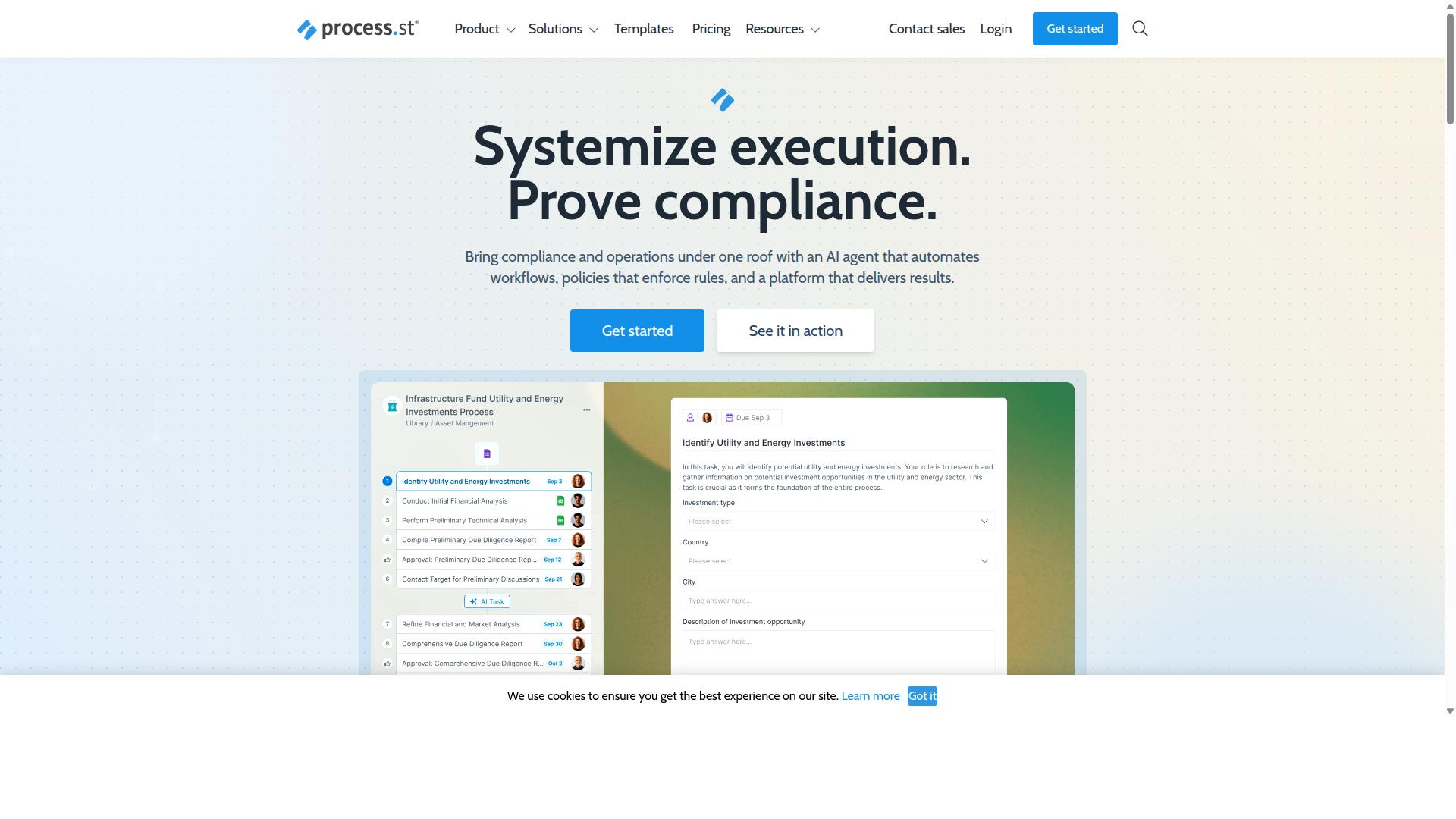
Process Street is a compliance operations platform that automates business processes, enforces policies, and produces audit-ready proof. This focus makes it different from traditional BPMN tools when teams need both process design and operational control in one system.
The platform includes three products that work together. Docs handles document management and policy control. Ops manages workflow automation and process orchestration. Cora serves as the AI compliance and risk agent that monitors controls and flags issues.
Process Street supports major compliance frameworks including ISO 9001, SOC 2, SOX, and FDA requirements. These certifications matter when organizations need documented proof that their processes meet external standards.
More than 3,000 companies and 1 million users already standardize processes on the platform. This adoption shows that teams value a system that combines process mapping with built-in compliance tracking.
When comparing Process Street to Camunda for BPMN-based process design, the key difference lies in how each platform handles operational execution. Camunda focuses primarily on workflow engines and process modeling. Process Street adds policy enforcement and audit trails directly into the same environment where processes run.
What Is Camunda?
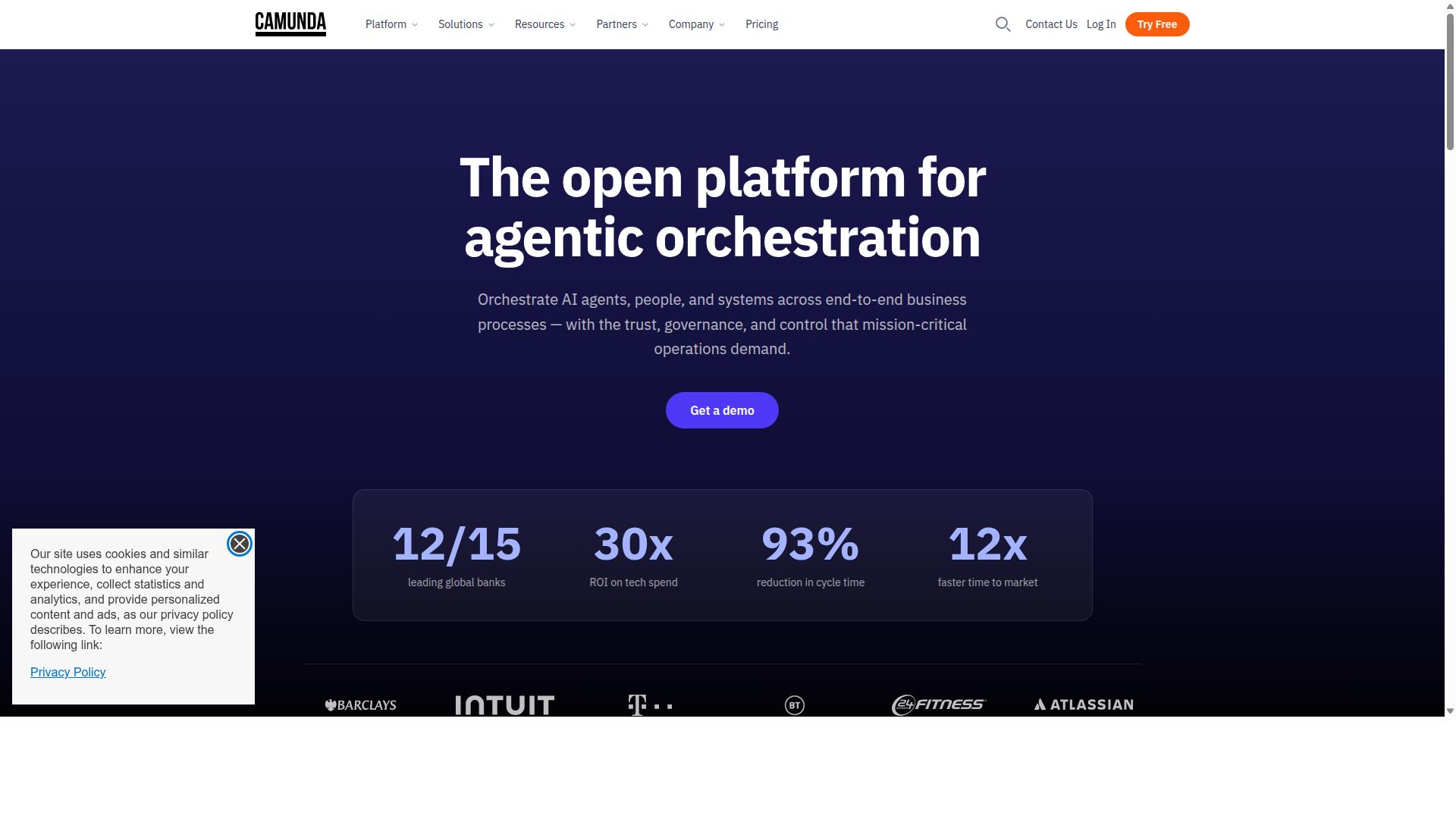
Camunda is an open-source workflow engine that executes BPMN 2.0 models for developers building custom process applications. The tool centers on process execution rather than process design for general business users.
BPMN 2.0 execution serves as the foundation for Camunda's approach. Developers use this standard to create models that run within their own applications and infrastructure.
The platform offers Java and Spring Boot integration as primary connection points. Teams embed Camunda into existing codebases or run it as a standalone service depending on their architecture needs.
Deployment options include both self-hosted installations and cloud-hosted versions. Organizations choose based on their infrastructure preferences and compliance requirements.
Camunda provides developer-centric tooling focused on technical implementation. The interface targets programmers who need to integrate workflow logic into larger software systems.
Business process management benefits from this technical foundation when teams require custom process execution capabilities. Development teams handle the modeling and deployment process directly.
Process design requirements differ when teams seek tools built specifically for business users rather than developers. The choice between technical workflow engines and business-focused platforms depends on who creates and manages processes.
Features Compared
This section breaks down three critical feature areas to compare the two platforms on BPMN process design and execution.
Process Street combines BPMN modeling with built-in compliance tools and document control. Camunda focuses on workflow engine capabilities that require additional layers for similar governance needs.
The comparison examines workflow design, automation capabilities, and document governance to show how each platform handles process execution requirements.
BPMN Workflow Design & Compliance Integration
Process Street embeds compliance checklists and control evidence directly into BPMN diagrams, while Camunda treats compliance as an external implementation.
Process Street links Docs to workflow steps for ISO and SOC evidence. Every policy version and approval record stays connected to the BPMN model itself.
Camunda requires custom code for similar traceability. External policy hooks must be built and maintained separately from the core workflow engine.
Process Street offers Ops for turning policies into AI-powered workflows. The platform also includes Cora, an AI compliance agent that monitors regulations and flags risks automatically.
AI-Powered Process Automation & Monitoring
Process Street's AI turns policies into executable workflows and surfaces live compliance dashboards, whereas Camunda exposes raw execution metrics via APIs.
Process Street's Process AI converts policy documents into workflow tasks. Analytics provides live visibility into compliance status across all active processes.
Camunda's monitoring remains developer-defined. Teams must build custom dashboards to surface the same level of operational insight.
Process Street includes Automations that connect to external systems through Zapier, Microsoft Power Automate, Tray.io, Make, and Public API access. The platform supports process orchestration and task automation as native capabilities.
Document Governance & Audit Readiness
Process Street stores every policy version, approval, and task record in one governed repository; Camunda leaves document control to external systems.
Process Street's Docs product provides version control and approval workflows for ISO 9001, SOC 2, SOX, and FDA requirements. The platform maintains SOC 2 Type II and ISO 27001 certifications.
Camunda does not include native document governance. Organizations must integrate separate document management systems to achieve comparable audit readiness.
Process Street's unified approach to process documentation and process governance reduces the need for multiple external tools. Audit export features consolidate evidence from across all BPMN workflows.
Pricing Compared
Process Street offers three transparent tiers; Camunda's cost depends on infrastructure and license choices.
Process Street's Startup plan targets growing teams that require controlled access and measured automation volume. This tier allows five users, 100 automation actions monthly, and up to 5,000 Data Set records.
Pro unlocks unlimited workflows, tasks, and custom automation actions. Teams can also manage custom user counts and 10,000 Data Set records, which suits mid-market organizations scaling their process design efforts.
Enterprise adds custom Data Set limits, unlimited Public API access, dedicated success management, priority support, and process consulting. Larger organizations often select this tier for advanced governance and compliance needs.
Camunda provides open-source self-hosted options alongside paid enterprise cloud services. Organizations typically cover hosting infrastructure, maintenance, and optional support contracts when running BPMN 2.0 engines internally.
Process Street users receive a fourteen-day free trial on the Pro tier without submitting a credit card. This approach lets teams evaluate workflow automation and business process modeling features before committing to a paid plan.
Camunda's pricing model requires separate budgeting for servers, database resources, and potential cloud hosting fees. Self-hosted deployments shift responsibility for uptime, security patches, and scaling to internal teams.
Process Street's transparent tiers give buyers predictable monthly expenses tied directly to user count and automation volume. Camunda customers often face variable costs tied to infrastructure choices and ongoing maintenance efforts.
Who Should Choose Process Street
Process Street suits operations, compliance, HR, and finance teams that need ready-made governance instead of building their own. These teams often face strict requirements around documentation, approvals, and audit trails. The platform provides structure that supports both process governance and workflow automation.
Target industries include financial services, healthcare, and manufacturing. Each sector operates under regulations that demand clear process documentation and consistent execution. Process Street addresses these needs through built-in compliance features rather than requiring teams to design controls from scratch.
Operations teams benefit when daily procedures must stay consistent across multiple locations. Compliance groups rely on standardized checklists to maintain audit readiness. HR departments use the platform for employee onboarding workflows that require sign-offs and policy acknowledgments. Finance functions apply the same approach to invoice processing and expense approvals.
Research suggests organizations with 49k+ employees have adopted these workflows to standardize onboarding across global locations. The platform supports process standardization without requiring teams to maintain separate documentation systems. This approach reduces the risk of variation between departments.
Teams that need five-minute support response times find value when process issues affect daily operations. Manufacturing companies use the platform for quality tracking procedures. Healthcare organizations apply it to document control requirements. Professional services firms rely on client onboarding processes that maintain compliance across multiple jurisdictions.
Who Should Choose Camunda
Camunda appeals to engineering teams that need a lightweight BPMN engine they can embed and extend. This open source platform gives developers direct control over the workflow engine while allowing custom integrations with existing systems. Organizations with strong technical resources often find this approach fits their needs.
The developer-centric design means teams write code to define business rules and process logic. Engineers can modify the core engine or build custom plugins when standard features do not meet specific requirements. This flexibility comes with the responsibility of managing infrastructure and maintenance.
Self-hosted deployments give teams complete control over data and security policies. Cloud options exist for organizations that prefer managed services without internal infrastructure overhead. Both approaches require technical expertise to configure and maintain effectively.
Extensibility makes Camunda suitable for complex process orchestration scenarios. Developers can integrate the workflow engine with custom databases, external APIs, and legacy systems through standard interfaces. This capability serves teams that need deep customization rather than out-of-the-box functionality.
Business process management teams with limited development resources may find the code-first approach creates barriers. Process design becomes a programming task rather than a visual modeling exercise. Organizations focused on rapid deployment and business user involvement often seek alternatives with stronger visual tools.
Final Verdict
Choose Process Street when compliance evidence and policy automation are non-negotiable; choose Camunda when you need a customizable workflow engine under full developer control.
BPMN-based process design requires different strengths depending on your operational priorities. Teams focused on audit trails and governance need documented evidence that their systems meet recognized security standards.
Process Street holds SOC 2 Type II and ISO 27001 certifications that provide this documented assurance. Camunda offers a developer-centric platform but lacks the same explicit certification references for compliance-heavy environments.
Scale matters when selecting a BPM platform for process modeling and execution. Process Street supports over 1 million users, indicating proven capacity for both small teams and enterprise deployments handling complex workflow automation.
Support access directly impacts process optimization and maintenance. Users reach Process Street through email and chat channels with a five-minute average response time and a 98 percent customer rating.
Camunda requires organizations to maintain internal technical resources for ongoing workflow engine management. The choice ultimately depends on whether compliance documentation and responsive support outweigh the need for complete code-level customization.
Process Street offers contact sales options plus availability through AWS Marketplace for teams ready to evaluate BPMN-based process design capabilities.
Recommended Resources: