Your teams are stuck choosing between two platforms for AI-powered compliance, and the decision hinges on who actually owns the audit trail when workflows meet policies.
By the end of this article you will see exactly how Process Street's Cora agent differs from Appian's AI tools in policy-to-workflow integration, where each system's automation stops short, and which pricing model aligns with your compliance volume.
Quick Verdict: Who's the Best for Advanced AI: Appian vs Process Street
Process Street wins for teams needing AI-powered compliance and audit-ready workflows. Appian suits enterprises requiring deep custom development and broad RPA integration.
Teams focused on compliance standards benefit from Process Street's certifications. The platform holds SOC 2 Type II and ISO 27001 certifications while remaining HIPAA and GDPR compliant. These credentials support audit-ready workflows across regulated industries.
Process Street serves 3,000+ companies and 1m+ users with consistent reliability. The platform maintains a 5-minute average response time and 98% customer rating. Data never trains AI models on this system, which addresses privacy concerns directly.
Appian provides flexibility for organizations building custom AI agents and process orchestration at scale. The platform supports extensive RPA connections and low-code development environments suited to complex enterprise requirements.
Organizations choosing between platforms should evaluate their specific compliance requirements first. Process Street's certified environment and privacy-first approach align with enterprise governance needs. Appian remains viable when custom development takes priority over rapid deployment.
At a glance: how Process Street compares to Appian on the features that matter most.
| Feature | Process Street | Appian |
|---|---|---|
| Advanced AI | ✓ | ✓ |
What Is Process Street?
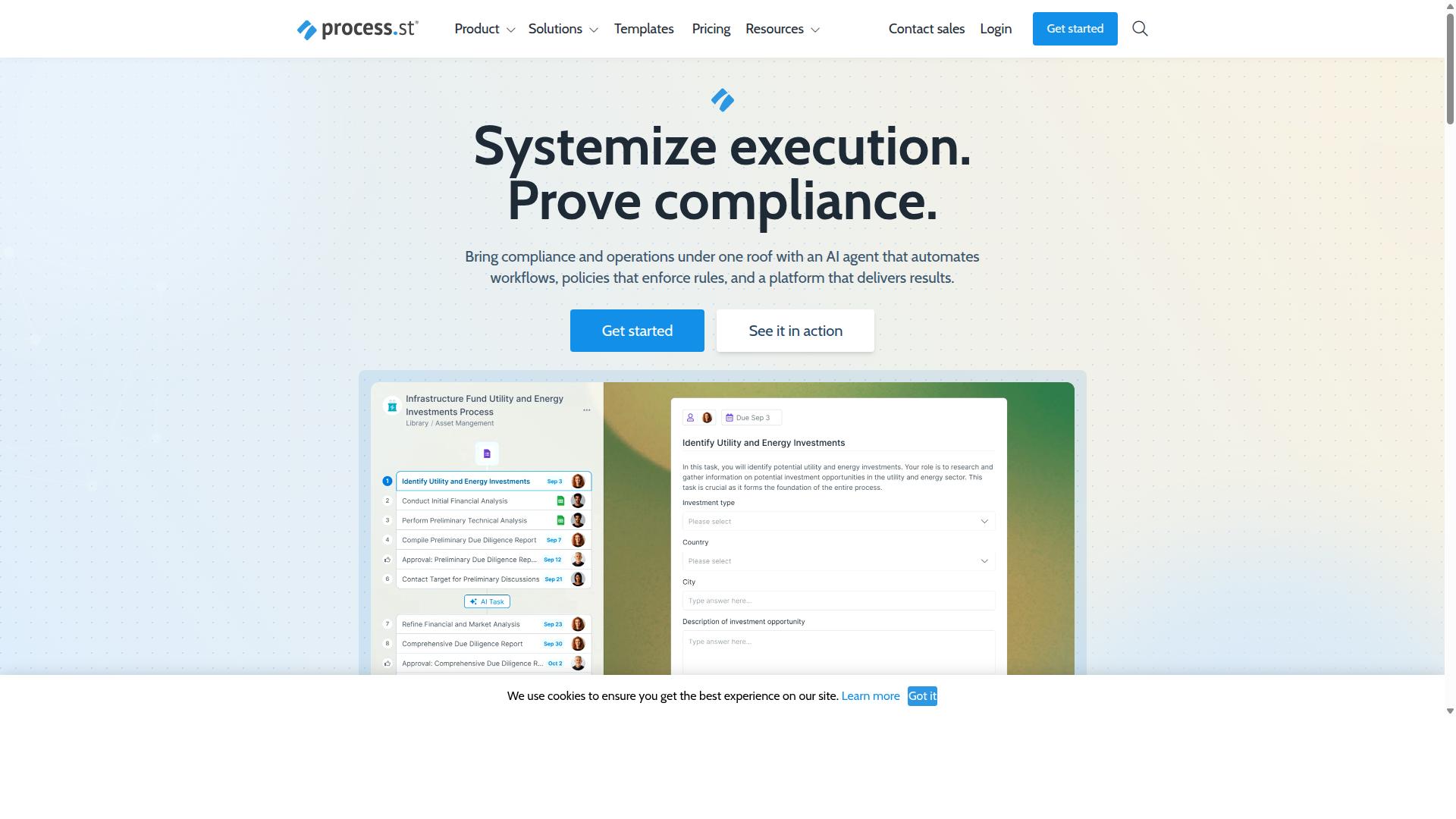
Process Street is a compliance operations platform that automates business processes and enforces policies with audit-ready proof. The platform focuses on three core products designed to help organizations standardize operations and maintain consistency across industries.
Docs handles document management and policy control. Ops manages workflow automation and process orchestration. Cora serves as an AI compliance and risk agent that supports cutting-edge AI features within the platform.
These products work together to deliver documented processes, automated enforcement, and intelligent risk assessment. Organizations use this combination to prove compliance outcomes while maintaining operational standards.
The platform supports both AI automation and traditional workflow automation requirements. This dual capability makes it relevant for teams comparing Process Street against other business process management solutions like Appian.
What Is Appian?
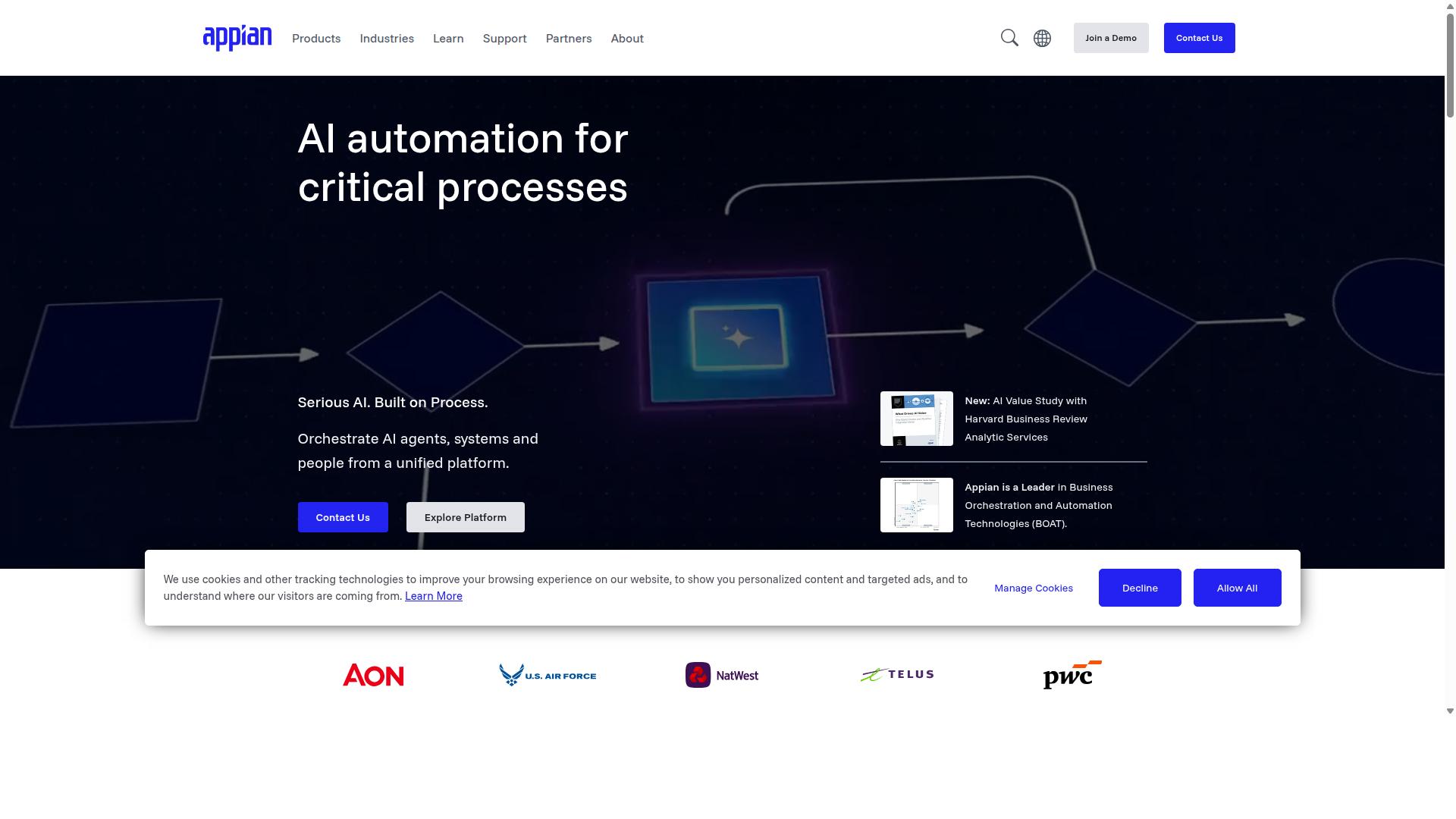
Appian is an enterprise business process management platform that combines low-code development with RPA and case management.
This solution targets large organizations that need structured business process management for complex workflows across multiple departments. It supports both cloud and on-premise deployment options.
Organizations often choose Appian when they require extensive customization through its development environment. The platform handles traditional automation alongside newer intelligent automation features.
Teams building applications on Appian typically work with professional developers who can leverage its low-code platform capabilities. This approach suits enterprises with dedicated IT resources and complex compliance requirements.
Features Compared
The three feature subsections below examine AI compliance, automation depth, and policy integration for both platforms. These areas directly impact how organizations manage risk and scale operations with advanced AI. Each platform takes a different approach to these capabilities. The comparison reveals distinct strengths in compliance monitoring, workflow execution, and policy synchronization.
AI Compliance Agent Capabilities
Process Street embeds AI compliance agents that monitor policy adherence and generate audit trails automatically. Cora operates as the dedicated compliance agent that monitors regulations, automates work, and flags risks. This continuous monitoring approach reduces manual oversight requirements while maintaining regulatory standards across multiple frameworks.
Appian offers AI governance features that organizations can configure according to their specific needs. These tools provide general oversight capabilities without the specialized compliance focus that Process Street delivers through Cora. The distinction matters for teams working with ISO, SOC 2, or FDA requirements where dedicated monitoring proves essential.
Process Street's approach centers on proactive risk identification rather than reactive compliance checks. The system tracks policy violations in real time and creates the documentation needed for audits. This built-in capability addresses the challenges that arise when manual compliance processes fail to keep pace with regulatory changes.
Workflow Automation with AI
Process Street converts policies into AI-powered workflows that execute and track tasks at scale. The Ops product serves as the workflow automation engine that transforms documented policies into executable processes. This direct connection between policies and operations eliminates the gaps that often occur when teams manage these elements separately.
Appian provides AI workflow tools that support business process management across various industries. These capabilities allow organizations to build custom automation solutions using their low-code platform. The approach offers flexibility while requiring additional configuration to achieve the same policy-to-workflow connectivity that Process Street delivers by default.
The difference becomes apparent when organizations need to maintain consistency between updated policies and active workflows. Process Street's integration ensures that policy changes flow directly into operational processes without manual intervention. This connection supports the scalability requirements that advanced AI automation demands in enterprise environments.
Policy-to-Workflow Integration
Process Street's Docs product links controlled documents directly to executable AI workflows for ISO, SOC 2, SOX, and FDA compliance. This integration synchronizes policy updates with live workflows, ensuring that operational processes reflect current requirements. The connection between documentation and execution reduces the risk of outdated procedures affecting business operations.
Appian supports policy-driven automation through its broader business process management capabilities. Organizations can configure workflows to align with policy requirements using the platform's development tools. This approach provides the flexibility to adapt to different policy frameworks while requiring more setup compared to Process Street's pre-configured compliance connections.
The integration advantage becomes clear when teams manage multiple compliance frameworks simultaneously. Process Street maintains the relationships between controlled documents and workflow execution automatically. This capability supports the audit trails and documentation requirements that regulatory compliance demands across different standards and industries.
Pricing Compared
Process Street offers three subscription tiers; Appian operates on an enterprise licensing model. The pricing structures reflect different approaches to serving organizations of varying sizes and complexity.
The Startup plan provides a simplified entry point for smaller teams. This tier includes unlimited workflows and tasks with up to 5,000 Data Set records. Organizations get 5 users and 10 guests along with 10 automation apps and 100 automation actions per month.
The Pro plan expands capabilities for growing teams. This plan offers unlimited workflows and tasks with up to 10,000 Data Set records. Custom user and guest allocations combine with all automation apps and flexible automation actions per month.
The Enterprise plan serves organizations requiring maximum flexibility. Custom Data Set records and unlimited Public API access come with a dedicated Success Manager. Priority support includes fully-managed workflows and custom integrations.
Additional Enterprise features include bulk document import and process consulting. The plan also provides health audits and personalized team training. These elements support complex deployment scenarios.
Appian pricing remains general and requires direct consultation. Enterprise licensing typically involves custom arrangements based on usage and requirements. The model suits large-scale deployments with specific needs.
Who Should Choose Process Street
Teams in compliance-heavy industries that need fast, low-code workflow automation with built-in audit trails should choose Process Street. Organizations working with regulatory requirements often face documentation delays and setup complexity. Process Street addresses these challenges through workflow automation designed for specific compliance needs.
Teams in operations, customer management, compliance, human resources, finance, and IT and security find the platform particularly effective. These roles frequently manage processes that require consistent documentation and traceable workflows. The platform supports these functions without requiring extensive technical resources.
Financial services, real estate, manufacturing, healthcare, professional services, technology, capital markets, and property management represent the industries that benefit most. Each sector deals with compliance standards and operational complexity that demands reliable process management. Process Street provides the structure needed for these environments.
Employee onboarding, client onboarding, ISO compliance, quality tracking, document control, and custom workflows serve as primary use cases. These applications directly address the operational challenges these industries encounter daily. Teams can implement these processes with reduced setup time compared to traditional alternatives.
Who Should Choose Appian
Large enterprises with complex, custom BPM requirements and dedicated developer resources may prefer Appian. These organizations often need extensive customization that extends beyond standard workflow tools.
Appian functions as a low-code platform that supports cutting-edge AI features alongside RPA integration. Organizations can build custom applications that combine business process management with intelligent automation features.
Enterprise teams that require on-premise deployment options may find this approach suitable. The platform supports hybrid deployment models for organizations with specific data residency or security requirements.
Companies working with legacy systems often benefit from Appian's ability to integrate through APIs. This flexibility allows teams to maintain existing infrastructure while adding modern automation layers.
Development teams with strong technical skills can leverage Appian's customization options. The platform provides tools for building tailored solutions that address specific business logic and compliance needs.
Organizations focused on process orchestration across multiple departments may consider this option. The platform supports complex decision automation scenarios that require custom rule development.
Final Verdict
Choose Process Street for compliance-first, AI-orchestrated workflows that deliver audit-ready proof in weeks rather than months. The platform serves 3,000+ companies and 1m+ users who need enterprise-grade security without sacrificing speed. SOC 2 Type II and ISO 27001 certifications back every deployment.
Appian offers solid BPM capabilities, yet most organizations still face lengthy setup cycles and manual compliance documentation. Process Street reduces this friction through built-in controls and automated evidence collection that auditors accept immediately.
The combination of certified security, fast deployment, and reliable audit trails gives Process Street a clear edge for advanced AI use cases that demand both performance and proof.
Recommended Resources: